Leave Your Message
Global buyers face a crowded Wire Management market, filled with cable ties, sleeves, clips, trays, glands, and raceways. The right choice depends on more than appearance. It must survive heat, dust, movement, moisture, and repeated maintenance.
In my experience, a tidy installation begins with accurate cable planning. A small office may need an under-desk tray and reusable straps. A manufacturing floor may require heavy-duty conduits, locking glands, and abrasion-resistant protective tubing. Data centers demand clear labeling, controlled bend radius, airflow protection, and easy access during upgrades. These details affect safety, service time, and long-term operating costs.
Wire Management specialist Mark A. Bowers explains, “A managed cable is a visible promise of a managed system.” The idea is simple, but often overlooked. Product quality varies between regions, even when specifications appear similar. Buyers should review material grades, load ratings, temperature ranges, installation instructions, packaging quality, and supplier testing records. Certifications should be checked carefully, not assumed from a product photograph.
This guide compares ten practical products for international purchasing teams. It considers installation speed, durability, flexibility, space efficiency, and maintenance access. It also examines whether each product suits offices, workshops, control cabinets, retail spaces, or data centers.
No list is perfect. Some low-cost products perform well in light-duty settings, while premium options may be unnecessary there. I have also seen attractive solutions fail because labels peeled away or adhesive weakened under heat. The best decision balances performance, local availability, total cost, and the realities of the installation site.
What Is Wire Management and Why Does It Matter Globally?
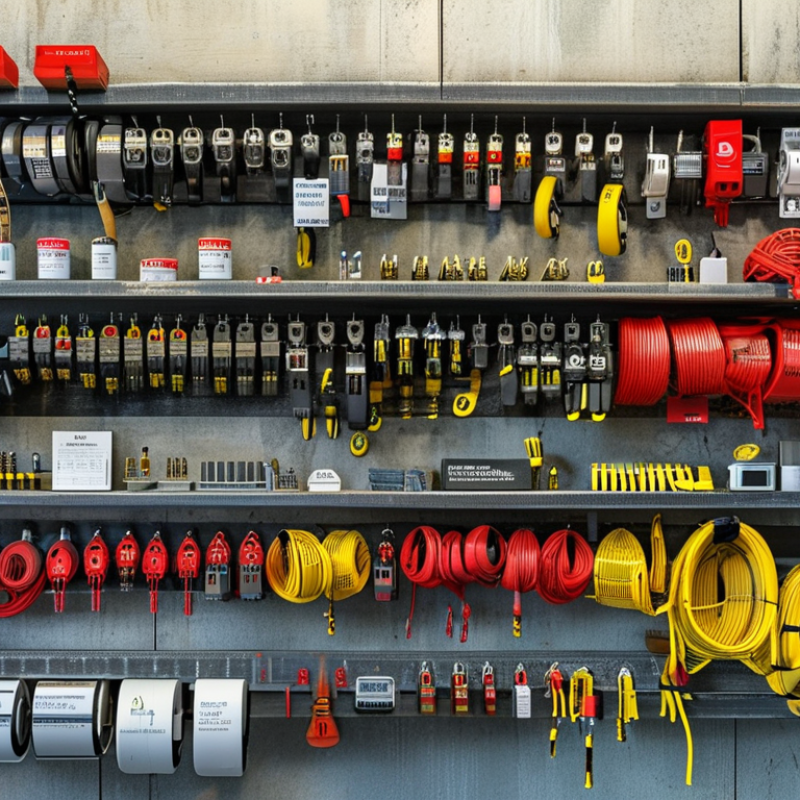
Wire management is the organized routing, protection, and labeling of electrical or data cables. Common solutions include cable trays, clips, sleeves, raceways, and reusable ties. These products keep wires away from heat, moisture, sharp edges, and moving equipment. They also make inspections and repairs faster. In warehouses, offices, factories, and homes, organized wiring reduces clutter and prevents avoidable damage.
Global buyers face different installation conditions. A product suitable for a dry office may fail in a humid workshop. Temperature, cable size, mounting surfaces, and maintenance access all matter. Clear labeling also helps international teams identify circuits safely, even when languages differ. From practical experience, I have found that strong adhesive alone is rarely enough for heavy cable bundles. Mechanical support is often safer. Still, product claims should be checked against testing documents and installation guidance. Marketing descriptions can sound more certain than real jobsite conditions.
Tips: Measure the cable bundle before ordering. Leave space for future wires. Check temperature and moisture ratings. Prefer reusable systems where maintenance is frequent. Test a small section first. That step may feel slow, but it can expose weak fasteners, poor fit, or difficult access before a full installation. A neat appearance matters, but serviceability matters more.
| Rank | Wire Management Product | Primary Function | Typical Materials | Typical Capacity or Size Range | Common Installation Method | Best-Fit Applications | Key Selection Considerations for Global Buyers | Common Reference Standards |
|---|---|---|---|---|---|---|---|---|
| 1 | Nylon Cable Ties | Bundle, secure, and route wires quickly. | UV-stabilized or general-purpose polyamide 6.6 | Common lengths: 100–760 mm; bundle diameters commonly up to 220 mm | Hand installation or tensioning tool; cut off excess tail | Electrical panels, appliances, automotive assemblies, and general cable bundling | Check tensile strength, operating temperature, UV resistance, flammability rating, and packaging requirements. | IEC 62275 is commonly referenced for cable management systems and cable ties. |
| 2 | Hook-and-Loop Cable Straps | Organize cables while allowing repeated opening and adjustment. | Nylon or polyester hook-and-loop material | Typical widths: 10–25 mm; reusable lengths commonly 150–500 mm | Wrap manually around cable bundles; some versions include buckles or mounting holes | Data centers, office equipment, audio-visual systems, and temporary installations | Useful where cables change frequently; verify cycle life, pull strength, moisture resistance, and strap width. | Product-specific testing is normally used; no single universal standard covers all hook-and-loop straps. |
| 3 | Adhesive Cable Clips | Hold individual cables or small bundles against a surface. | Polyamide, ABS, polypropylene, acrylic foam tape, or rubber-based adhesive | Common cable capacity: 3–12 mm; larger models may hold bundles up to approximately 20 mm | Peel-and-stick installation on a clean, dry, smooth surface | Desks, cabinets, consumer electronics, light-duty machinery, and indoor wiring | Confirm surface compatibility, adhesive temperature range, aging performance, and maximum supported load. | Adhesive performance is typically evaluated using manufacturer or application-specific test methods. |
| 4 | Cable Glands | Provide cable entry, strain relief, sealing, and protection at enclosures. | Nylon, brass, nickel-plated brass, stainless steel, and elastomer seals | Common metric thread sizes: M12–M63; cable sealing ranges vary by gland size | Threaded installation through a panel knockout with a locknut | Control cabinets, outdoor equipment, industrial machinery, and power distribution enclosures | Match thread type, cable diameter, ingress protection, temperature range, material, and hazardous-area requirements. | IEC 62444 is widely used for cable glands; enclosure ingress protection is commonly classified under IEC 60529. |
| 5 | Flexible Corrugated Conduit | Protect wires from abrasion, impact, bending, dust, and limited moisture exposure. | Polyamide, polypropylene, or modified polyethylene | Common nominal diameters: 10–54 mm; available in slit and non-slit versions | Push-in installation, often with conduit fittings or clips | Automotive wiring, industrial automation, machinery, and control-panel cable routing | Evaluate bend radius, compression strength, flame behavior, oil resistance, temperature range, and slit retention. | IEC 61386 is commonly referenced for conduit systems for cable management. |
| 6 | Braided Expandable Cable Sleeve | Group and protect multiple cables while preserving flexibility. | PET monofilament, nylon, fiberglass, or flame-retardant yarn | Nominal diameters commonly range from 3–50 mm; expansion varies by construction | Slide over a cable bundle; cut edges may require heat sealing or end treatment | Computers, robotics, automotive harnesses, audio systems, and visible cable installations | Check expansion ratio, abrasion resistance, edge fraying, flame rating, temperature range, and bundle diameter. | Flammability testing may reference UL 94 or IEC 60695-11-10, depending on the product and market. |
| 7 | Spiral Cable Wrap | Bind and route cables while allowing branch-outs at different points. | Polyethylene, polypropylene, or nylon | Common nominal sizes: 6–25 mm; supplied in cut lengths or continuous coils | Wrap manually around an existing cable bundle | Office equipment, automotive interiors, laboratory equipment, and light industrial wiring | Consider wrap diameter, flexibility, abrasion resistance, operating temperature, and ease of adding or removing cables. | Product-specific mechanical and environmental testing is generally used. |
| 8 | PVC or Halogen-Free Cable Raceway | Enclose and conceal cables along walls, floors, ceilings, and equipment surfaces. | Rigid PVC, ABS, polycarbonate, or halogen-free engineering polymer | Common widths: 20–100 mm; common depths: 10–60 mm | Self-adhesive backing, screws, or snap-on installation with fittings | Offices, retail spaces, residential buildings, laboratories, and commercial interiors | Check internal fill area, cover retention, fire performance, impact resistance, color availability, and local building codes. | Electrical trunking and ducting requirements may be addressed by IEC 61084 series standards. |
| 9 | Perforated Cable Tray | Support and route larger groups of power, control, and communication cables. | Pre-galvanized steel, hot-dip galvanized steel, stainless steel, or aluminum | Typical widths: 50–600 mm; common side heights: 25–100 mm | Mounted on brackets, threaded rods, or support frames | Factories, commercial buildings, data centers, renewable-energy facilities, and infrastructure projects | Verify load capacity, span, corrosion protection, bonding continuity, cable separation, and required accessories. | IEC 61537 is commonly referenced for cable tray and cable ladder systems. |
| 10 | Floor Cable Cover | Protect cables crossing walkways and reduce trip hazards. | Thermoplastic rubber, polyurethane, PVC, or recycled rubber | Common channel widths: 20–100 mm; ramp heights commonly 10–50 mm | Lay over cables; adhesive, screws, or high-visibility end caps may be used | Events, warehouses, offices, workshops, construction sites, and temporary power distribution | Assess load rating, channel dimensions, surface grip, visibility, flame behavior, weather resistance, and accessibility needs. | Load and slip performance are generally assessed according to application-specific safety requirements and local regulations. |
Data note: Dimensions and capacities shown are typical market ranges rather than universal specifications. Actual performance depends on material grade, design, installation method, environmental conditions, and applicable national regulations.