How to Choose the Best Standing Desk for Your Home Office?
Choosing the best standing desk can feel overwhelming. The market is filled with various options and features. A standing desk can transform your home office experience. It promotes better posture and can elevate your productivity.
When selecting a standing desk, consider your space and daily routines. Think about desk height adjustments and materials that fit your aesthetic. Some may wish for sleek designs, while others prioritize storage. Don’t forget to reflect on your budget. It's important to invest wisely without overspending.
However, it's easy to overlook small details. You might find a desk that looks great but lacks stability. Or you may choose one that is too bulky for your area. Take your time to research. A standing desk is not just a furniture piece; it’s a crucial part of your workspace.
Understand Your Workspace and Ergonomic Needs
Choosing the right standing desk for your home office hinges on understanding your workspace and ergonomic needs. Research shows that standing for part of the day can reduce back pain by 32%, but it's essential to avoid overdoing it. Many people feel tired or uncomfortable if they stand too long.
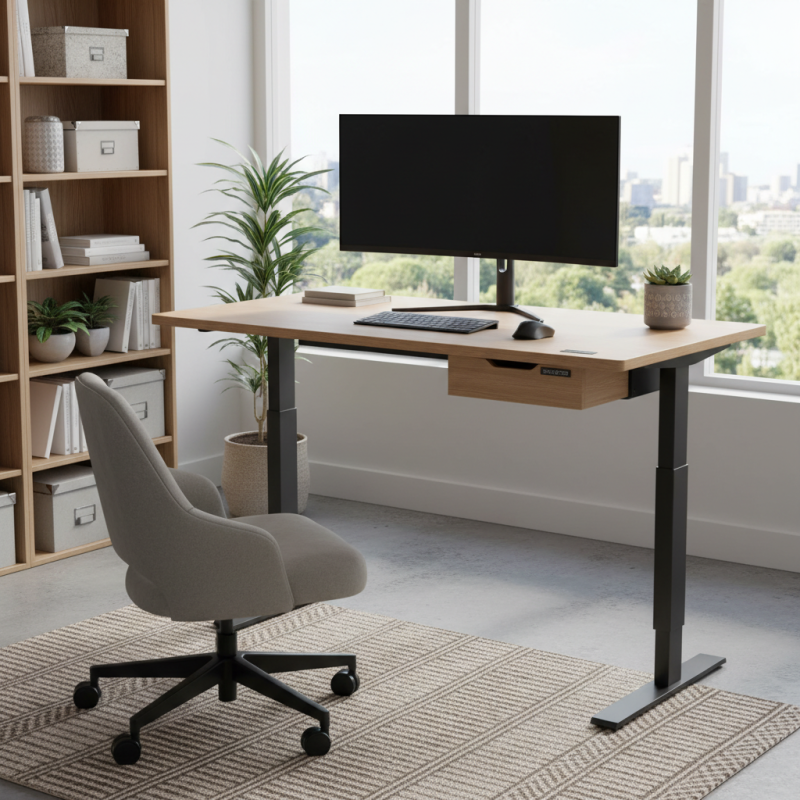
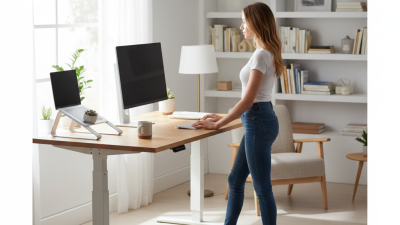
Consider the height of your desk. Your elbows should be at a 90-degree angle while typing. An adjustable desk can cater to varying heights, making it easier to switch between sitting and standing. The desk should also accommodate your monitor; the top of the screen should be at or slightly below eye level. Studies indicate that a proper monitor position can decrease neck strain significantly.
When setting up your workspace, include a supportive anti-fatigue mat. These mats can enhance comfort and reduce fatigue. A study found that individuals using these mats felt 40% less discomfort at the end of a day. Ensure your workspace is well-organized to minimize reaching. A cluttered desk can lead to poor posture. Remember, investing time in ergonomics pays off in productivity and health.
Height Preferences for Standing Desks
Evaluate Different Types of Standing Desks
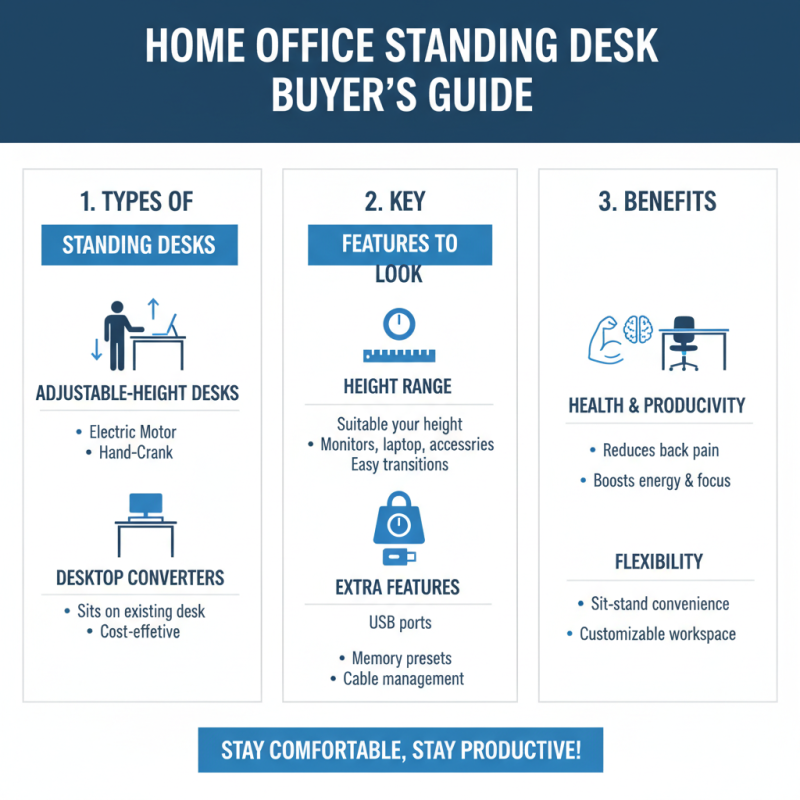
When selecting the best standing desk for your home office, consider the different types available. Adjustable desks offer flexibility. They let you switch between sitting and standing. This feature helps maintain comfort throughout the day.
Another option is the fixed-height desk. These desks are simpler. They do not allow height changes. However, they often have a sturdy build and a classic aesthetic. If you prefer a more permanent solution, this might be suitable.
**Tips:** Test the height before buying. Ensure it meets your needs while standing. Also, evaluate the desk’s surface area. Do you have ample space for your computer and other essentials?
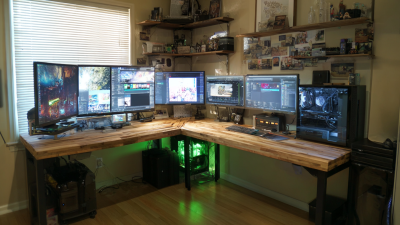
A corner desk could maximize space. It allows for a more expansive workspace. However, be aware of your room layout. The shape may not fit in every home office. Reflect on the atmosphere you want to create as well.
Consider Height Adjustability Features
When choosing a standing desk, height adjustability is crucial. Many desks offer manual or electric adjustment features. This ensures the desk suits your height perfectly. A well-adjusted desk can improve posture and productivity.
Tips: Measure your elbow height while seated. This gives a good starting point for desk height. Consider a range of heights, as standing preferences can change throughout the day. Some people prefer higher adjustments during active tasks.
Not all desks provide stable support at varying heights. Unsteady desks can lead to distractions. You may find yourself fussing with the setup. Check the weight capacity, as heavier items require sturdier designs. Stability matters for a functional workspace.
Assess Material and Build Quality
When selecting a standing desk, material and build quality are crucial factors. Studies suggest that a well-constructed desk can enhance usability and longevity. Research from a leading ergonomic institute indicates that desks made from solid wood or high-quality metal significantly reduce the risk of wobble. Stability impacts comfort. An unstable desk can disrupt productivity and lead to frustration, which is counterproductive.
Many people overlook the importance of a desk's finish. Desks with protective surfaces are more resilient to scratches and stains. According to industry analyses, a desktop covered with anti-scratch material can extend the desk’s life by an average of five years. This durability becomes essential as wear and tear can influence not just appearance but functionality as well.
Yet, it’s vital to consider weight capacity. Some desks claim to hold substantial weight but compromise on the strength of materials. Selecting a desk that can support multiple monitors or heavy equipment is essential. Reports show that a desk should ideally support at least 200 pounds without strain. Ignoring weight limits may lead to premature failures.
How to Choose the Best Standing Desk for Your Home Office? - Assess Material and Build Quality
| Material |
Build Quality |
Weight Capacity |
Durability (Years) |
Price Range ($) |
| Solid Wood |
High |
300 lbs |
15-20 |
500-1000 |
| MDF with Veneer |
Medium |
250 lbs |
5-10 |
200-400 |
| Laminate |
Medium |
200 lbs |
5-7 |
150-300 |
| Steel Frame |
Very High |
400 lbs |
20+ |
300-600 |
| Bamboo |
High |
350 lbs |
10-15 |
400-800 |
Review Budget and Price Range Options
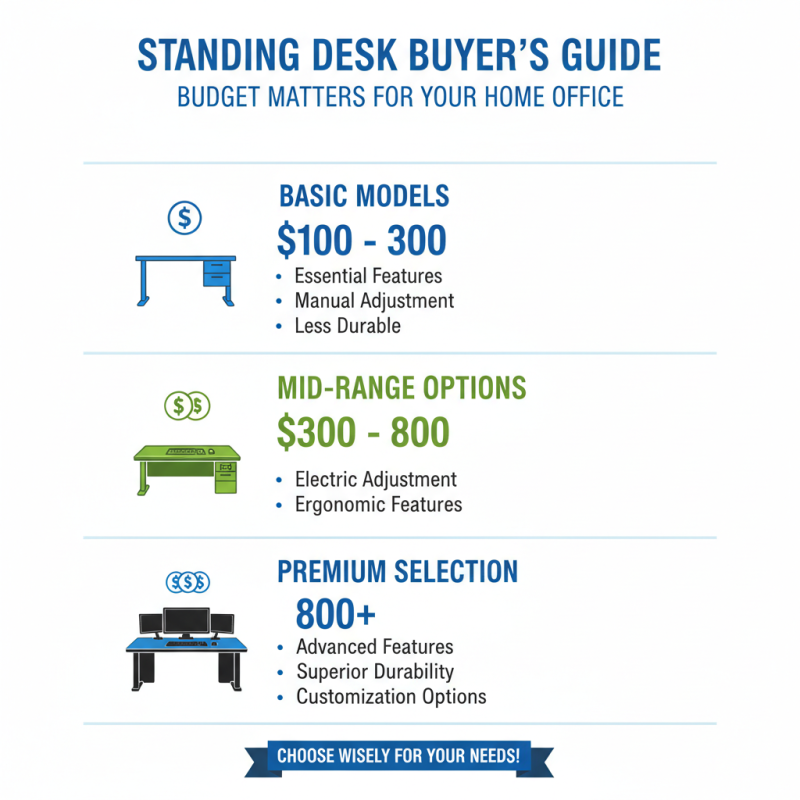
When considering a standing desk for your home office, budget plays a crucial role. Prices can vary greatly, ranging from affordable options to more premium ones. You might find basic models for as low as $100. These often provide essential features but may lack durability or adjustability.
On the higher end, prices can soar above $600. These desks often come with advanced features such as built-in electric motors for height adjustments. However, it's essential to weigh whether those extra features are worth the investment. You might think you need that fancy desk, but sometimes, simpler models serve well.
Reflect on your daily routine. If you work at your desk for long hours, investing in quality might pay off. But for occasional use, a budget-friendly option can suffice. Consider not just the price, but also the long-term value of comfort and productivity. Finding a balance isn't always straightforward.