What Are the Top Types of Display Shelves?
Display Shelves do more than hold products, books, or keepsakes. They shape how a room feels and how easily people find what they need. A narrow wall-mounted shelf can free floor space in a small shop. A sturdy freestanding unit can organize heavier stock near a busy aisle. Some designs make items visible. Others keep them protected. The best choice depends on the objects, available space, and daily use—not appearance alone. Small details matter. Shelf depth, edge height, material, and weight capacity affect access and stability. A display that looks elegant but is difficult to restock may frustrate staff. Space matters.
This guide examines common options, including floating, corner, ladder, glass, gondola, and modular shelves. Each serves a different purpose. Floating shelves create a clean line for light décor, while glass units suit objects that benefit from visibility and protection. Gondola shelves often help retailers present products from several sides. Modular systems can adapt when inventory or room layouts change. Yet no type works everywhere. A glass shelf may show fingerprints, and a deep unit can hide smaller items at the back. Those trade-offs deserve attention. By comparing design, capacity, placement, and maintenance, readers can narrow the choices with confidence. The goal is not to find a universally perfect shelf; it is to select a reliable fit for the space and the things it must support.
How Display Shelves Are Classified by Structure, Material, and Retail Use
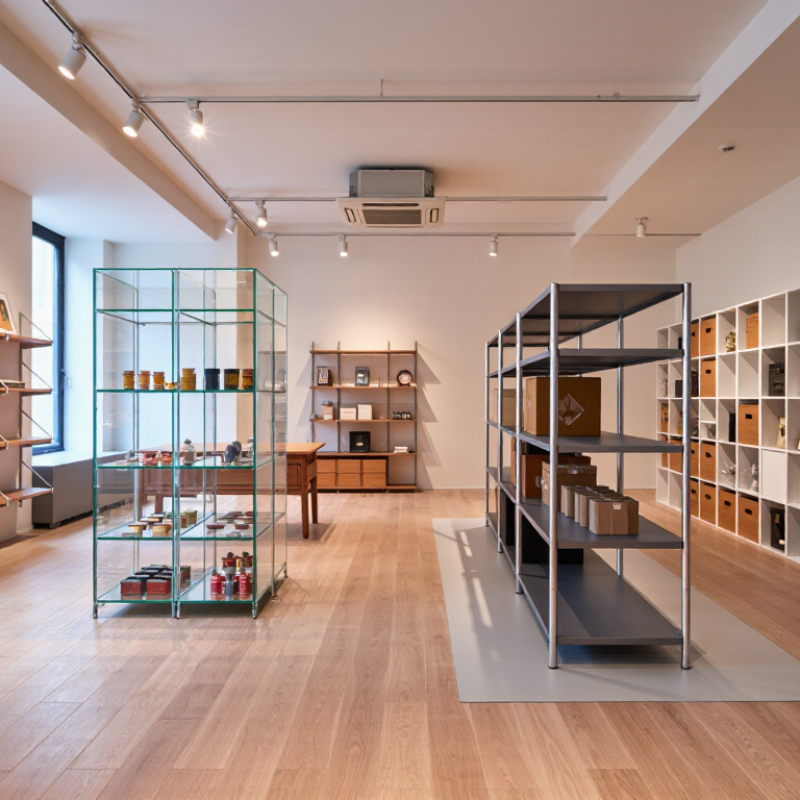
Display shelves can be classified by structure, material, and the job they do in a store. Freestanding units suit open floor areas, while wall-mounted shelves keep narrow aisles clear. Gondola shelving, often used in grocery stores, has shelves on both sides and adjustable levels. Corner units use awkward spaces, though products can be harder to reach at the back.
Materials affect appearance, maintenance, and load capacity. Metal shelves handle heavier stock and frequent restocking; wood adds warmth to a bakery or home-goods display. Glass makes small items visible from several angles, but fingerprints show quickly. Acrylic is lightweight and lets light pass through. Check the shelf’s rated capacity rather than judging by thickness alone.
Retail use matters, too. A pharmacy may need clearly separated product rows, while a clothing shop may favor low shelves that keep garments easy to browse. Small accessories benefit from shallow shelves, so items do not disappear behind one another. Measure the products and the walking space before choosing. A tidy classification helps, but real stores are rarely tidy on paper. Recheck sightlines after stocking; one tall package can block an entire row.
Wall-Mounted Shelves: ADA Reach Ranges Span 15–48 Inches Above the Floor
Wall-mounted display shelves can save floor space and keep featured items visible. For accessible reach, a useful reference is 15 to 48 inches above the finished floor. ADA reach limits apply to covered accessible elements, not automatically to every display shelf. Check the project’s requirements before setting a fixed height. Small details matter.
A shelf within this range is not necessarily easy to use. Deep ledges, tall price holders, or products pushed to the back can make items hard to reach. Keep frequently handled goods near the front, and leave clear floor space for approach. A lower shelf can help children and seated visitors, while eye-level displays improve browsing for many customers. There is no single height that works for everyone.
Tips: Measure from the finished floor, not the bare subfloor. Test the shelf with a sample item and a real reach. Keep labels visible, and avoid placing essential information above the accessible range. A tape measure helps. So does a second opinion.
Floating and Bracket Shelves: Comparing Support Systems and Load Ratings
Floating shelves hide their support inside the wall and shelf, creating a clean, uninterrupted line. Many use steel rods fixed to wall studs or masonry, with matching sockets inside the shelf. Their neat appearance can be misleading: a deep shelf puts more leverage on its fixings, especially when heavy objects sit near the front edge. Check the rating for the complete system, not just the shelf board. Ratings vary with wall material, fixing type, and spacing.
Bracket shelves show their support. Triangular brackets spread weight between the wall and shelf, and they are often easier to inspect or replace. Still, a sturdy bracket cannot compensate for weak fixings or a hollow wall anchor used beyond its rated capacity. A common mistake is to compare shelf ratings without checking how each one was installed. It’s easy to miss.
For a small display, place the shelf’s intended load across the surface rather than stacking it at one end. Follow the maker’s instructions, use fixings suited to the wall, and add weight gradually. A rating is not a promise for every wall. I still find that part easy to misjudge.
Glass and Slatwall Displays: Balancing Product Visibility with Flexible Merchandising
What Are the Top Types of Display Shelves?
Glass and slatwall displays solve different merchandising problems. Glass shelves create a clean, open view of products. They work well for cosmetics, accessories, collectibles, and packaged goods that need careful presentation. In a well-lit cabinet, transparent panels can make small items feel more valuable. However, fingerprints and glare appear quickly. Staff must clean the surface regularly. That daily task is easy to underestimate.
Slatwall displays offer greater flexibility. Their horizontal grooves accept adjustable shelves, hooks, baskets, and brackets. A store team can change product heights without replacing the entire fixture. This helps when packaging sizes change or seasonal items arrive. I have seen a display improve simply by moving one shelf lower. Customers could then reach the products comfortably. Still, slatwall can look crowded when every slot is filled. More capacity does not always create better selling space.
Combining both systems can balance visibility with practical merchandising. Glass sections can highlight premium or delicate products near eye level. Slatwall panels can support related items below or beside them. Keep the strongest visual focus near the customer’s natural sightline. Leave enough space between products for clear reading and easy handling. Measure aisle clearance before installation. A beautiful display becomes less effective when shoppers cannot move around it. Product testing also matters. Observe where customers pause, reach, and walk away. Those details may challenge the original layout.