Leave Your Message

2026 Best Personal Space Products for Global Buyers?

Choosing the best Personal Space products for global buyers in 2026 requires more than comparing prices and appearance. Buyers now examine acoustic performance, material safety, ergonomic comfort, energy use, repairability, and delivery conditions. A compact privacy booth may look ideal in a showroom, yet feel narrow after two hours of video meetings. A desk divider may reduce visual distraction, but absorb little sound in a busy office.

Environmental psychologist Robert Sommer wrote, “Personal space is an area with an invisible boundary surrounding a person's body into which intruders may not come.” His observation remains practical today. Effective products should protect concentration without creating isolation. They should also fit different body sizes, cultural expectations, workplace layouts, and accessibility needs.

This guide evaluates privacy pods, acoustic panels, modular screens, personal air-quality devices, and adaptable workstations. Real-world details matter: washable fabric, replaceable filters, stable hinges, cable access, and clear assembly instructions. Global buyers should also verify certifications, warranty coverage, local voltage requirements, and spare-part availability before ordering.

No product solves every personal-space problem. That is worth admitting. Some “smart” features add cost without improving comfort. Some eco-friendly claims lack transparent evidence. Our comparison therefore focuses on measurable performance, user experience, supplier reliability, and long-term value. The strongest choice may not be the most expensive model. It may be the product that quietly works every day, survives regular use, and remains easy to repair.

2026 Best Personal Space Products for Global Buyers?

What Personal Space Products Mean and Who Uses Them

2026 Best Personal Space Products for Global Buyers?

Personal space products are tools that help people create a private, comfortable area in shared environments. They may include portable room dividers, desk privacy panels, acoustic screens, compact workstations, and adjustable task lights. These products do more than separate furniture. They can reduce visual interruptions, soften nearby conversation, and define a small zone for work, study, rest, or personal care.

Remote workers often use them in bedrooms, kitchens, or shared living rooms. Students may need a focused corner in a dormitory or library. Travelers can benefit from lightweight dividers and foldable accessories in temporary accommodation. Families, caregivers, and office teams also use personal space products when several activities happen in one room. A product should match the user’s actual routine, not just look attractive in a photograph.

Material quality matters. Buyers should check stability, washable surfaces, ventilation, product dimensions, and clear safety information. In warmer regions, dense fabrics may feel uncomfortable, while cold climates may require stronger insulation. Accessibility also deserves attention, especially when products affect movement, lighting, or reach. No product removes every distraction. A screen can block sight but not noise. A thick panel may improve acoustics but occupy valuable floor space. That trade-off is easy to overlook. Before purchasing, measure the room, observe the busiest hours, and test whether the product supports real daily behavior.

Main Categories of Personal Space Products in 2026

2026 Best Personal Space Products for Global Buyers?

Main Categories of Personal Space Products in 2026

Personal space products now serve work, rest, focus, and recovery. The main category remains ergonomic furniture, including adjustable desks, supportive chairs, footrests, and compact monitor stands. Buyers should check height ranges, load limits, repair access, and local electrical standards. A beautiful chair can still fail after six months.

Acoustic and visual privacy products are expanding in shared homes and offices. Common options include portable screens, sound-absorbing panels, privacy curtains, and enclosed focus pods. The Global Wellness Institute valued the wellness economy at 6.3 trillion US dollars in 2023, showing stronger demand for healthier environments. However, quiet design is not the same as complete sound isolation. Sellers must state realistic performance levels.

Air, lighting, and personal climate products form another important category. Buyers are seeking adjustable task lights, air-quality monitors, compact purifiers, cooling devices, and humidity controls. The International Energy Agency reports that building operations account for about 30% of global energy demand, so efficient products matter. Portable work kits also deserve attention, including foldable tables, cable organizers, laptop supports, and rechargeable lamps. Compatibility remains uneven across countries. A product may look universal but use the wrong plug, voltage, or replacement filter. Global buyers should request test reports, material details, warranty terms, and spare-part availability before ordering.

Key Features and Selection Criteria for Global Buyers

For global buyers, the best personal space products in 2026 should balance privacy, comfort, safety, and easy maintenance. Useful options include acoustic work pods, height-adjustable desks, task lights, and compact air cleaners. ISO 23351-1 provides a recognized method for measuring speech privacy in furniture-based enclosures. However, one acoustic rating cannot describe every workplace.

Material choice matters. Look for low-emission surfaces, replaceable filters, durable hinges, and accessible spare parts. The International Energy Agency reports that buildings consume about 30% of global final energy. Therefore, buyers should check standby power, lighting efficiency, and ventilation demand. The Global Wellness Institute valued the wellness economy at 6.3 trillion dollars in 2023. That figure supports growing interest in products that reduce visual noise and improve daily comfort. Still, wellness claims need evidence. A soft chair is not automatically ergonomic.

Tips: Measure the user’s space first. Check doorway width and local voltage. Request test data for noise, airflow, and material emissions. Confirm conformity marks for the destination market, because requirements differ across regions. Prefer modular designs with repairable parts. A low purchase price may become expensive after shipping, filters, or damaged panels. I would also test the product for one full workday. Short demonstrations can hide heat, glare, or uncomfortable posture. That detail is often missed.

2026 Best Personal Space Products for Global Buyers? - Key Features and Selection Criteria for Global Buyers

Product Category Typical Application Typical Size and Capacity Privacy and Acoustic Features Portability and Installation Ventilation and Lighting Safety and Compliance Checks Best Selection Priority for Global Buyers
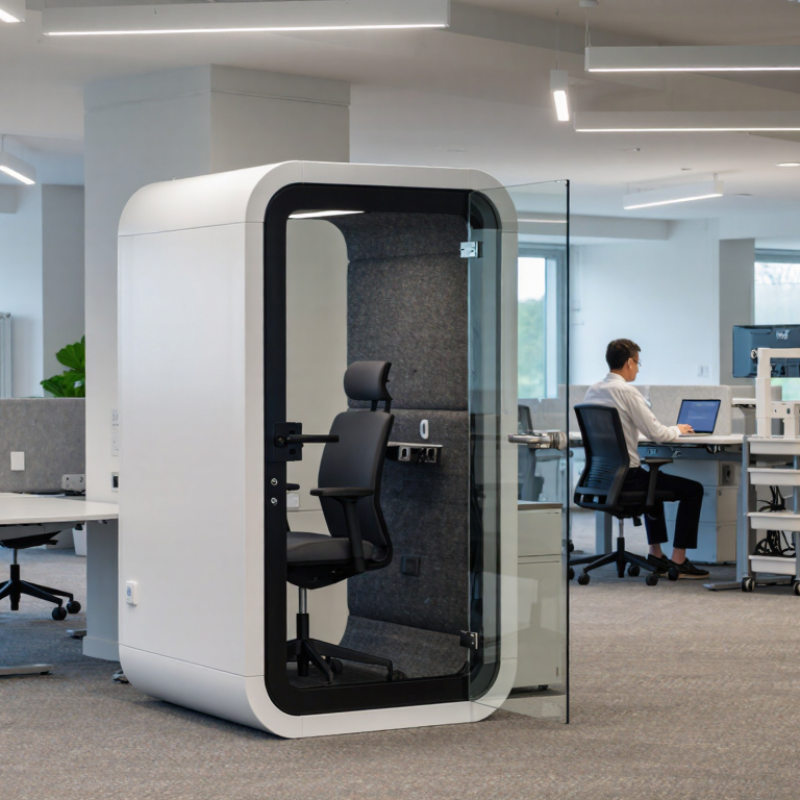
Single-Person Acoustic Booth Video calls, focused work, interviews, and confidential conversations in offices or shared spaces. Usually designed for one seated user; external footprints commonly occupy about 1–2 m². Sound-absorbing panels, sealed or partially sealed structure, solid door, and acoustic lining. Verify tested sound performance rather than relying on marketing terms. Generally semi-permanent; often delivered flat-packed or in assembled sections. Confirm lift, doorway, and floor-loading requirements. Mechanical ventilation is normally required for an enclosed booth. Adjustable LED lighting and occupancy controls are useful for long sessions. Check electrical certification for the destination market, fire performance of interior materials, ventilation safety, grounding, and accessible cable routing. Acoustic test evidence, indoor-air quality, ventilation noise, electrical compatibility, delivery access, warranty support, and replacement parts.
Two-Person Meeting Booth Small meetings, online collaboration, recruitment interviews, and private customer discussions. Typically accommodates two seated users; requires more floor area and greater ventilation capacity than a single-person booth. Acoustic wall and ceiling treatment, closable entrance, and reduced internal reverberation. Look for independent acoustic test results using recognized measurement methods. Usually modular and relocatable but not highly portable. Confirm assembly time, moving weight, and whether specialist installation is required. Continuous fresh-air exchange, quiet fan operation, task lighting, and optional occupancy sensors improve comfort and energy efficiency. Verify fire-rating documentation, electrical safety, ventilation performance, emergency egress, accessible dimensions, and local building requirements. User comfort, conversation privacy, air changes, noise from fans and doors, installation service, and total landed cost.
Folding Privacy Screen Temporary separation for desks, clinics, classrooms, reception areas, and shared accommodation. Commonly consists of two to four connected panels; height is usually around standing desk or seated-eye level, depending on the design. Provides visual privacy but generally offers limited speech privacy because it is not fully enclosed and has no complete acoustic seal. Highly portable, foldable, and quick to deploy. Check hinge durability, folded dimensions, panel stability, and storage requirements. Normally passive and does not require power. Perforated or fabric-covered surfaces may improve sound absorption without blocking airflow. Check material fire performance, anti-tip stability, rounded edges, cleaning compatibility, and resistance to repeated folding. Low landed cost, low weight, fast deployment, washable surfaces, visual coverage, and suitability for temporary layouts.
Desk-Mounted Privacy Panel Open-plan offices, call centers, libraries, and home workstations requiring direct visual separation. Available in desk-length modules with heights commonly selected for seated privacy; exact dimensions must match desk thickness and depth. Fabric, PET felt, foam-backed, or other absorptive surfaces can reduce reflections and visual distractions, but they do not create a soundproof workstation. Easy to install with clamps, brackets, or rails. Confirm compatibility with sit-stand desks, cable trays, monitor arms, and desktop accessories. No power is normally required. Permeable materials preserve air circulation and reduce the risk of blocked desk ventilation. Check clamp strength, edge protection, fabric cleanliness, flame performance, low-emission materials, and compatibility with local workplace rules. Desk compatibility, visual coverage, acoustic absorption, installation flexibility, surface hygiene, and replacement-panel availability.
Portable Changing and Privacy Tent Events, outdoor activities, medical screening, temporary accommodation, and emergency relief settings. Usually intended for one standing user; packed size is significantly smaller than the deployed footprint. Opaque fabric provides visual privacy. It is not designed for speech privacy or significant noise reduction. Lightweight, collapsible, and suitable for transport. Check frame resilience, anchoring method, wind limitations, and packed weight. Mesh vents or screened openings improve airflow. Outdoor models may require water-resistant fabric and UV-resistant components. Check fabric flame performance, anti-mold treatment, anchoring safety, weather resistance, zipper reliability, and cleaning instructions. Packed size, deployment speed, weather suitability, hygiene, structural stability, and ease of transport across borders.
Acoustic Workstation Enclosure Concentrated work, online teaching, customer support, and shared offices where a full booth is not practical. Usually surrounds an existing desk or workstation and may cover one seated user without a separate floor base. Partial enclosure and sound-absorbing surfaces help control reverberation and nearby distractions; performance depends strongly on ceiling height and surrounding noise. Often modular and easier to relocate than a complete booth. Confirm attachment points, ceiling clearance, and compatibility with existing furniture. Passive airflow is common. Open or semi-open designs help avoid heat buildup but provide less privacy than enclosed products. Check structural stability, material fire performance, low-emission finishes, cleanability, and safe integration with monitors and electrical equipment. Balance between acoustic absorption, visual openness, installation cost, workspace flexibility, and future reconfiguration.
Personal Privacy Curtain System Healthcare spaces, dormitories, hospitality rooms, dressing areas, and temporary partitioning. Configured to the available ceiling, wall, or track dimensions; panels can cover beds, cubicles, or designated changing areas. Provides visual separation only. Track gaps and fabric construction mean that speech remains audible in most installations. Fixed-track systems are less portable but highly space-efficient. Confirm ceiling structure, track layout, panel overlap, and replacement procedures. Airflow is generally maintained above or below the curtain. Select washable, antimicrobial, or disposable-compatible fabrics where hygiene is critical. Check healthcare or institutional hygiene requirements, flame performance, laundering durability, smooth track operation, and accessibility clearance. Cleanability, fire performance, track durability, installation conditions, replacement fabric availability, and lifecycle cost.
Personal Sleep or Rest Pod Airports, workplaces, universities, wellness facilities, and travel areas requiring short-duration rest. Designed for one reclining or semi-reclining user; internal clearance and maximum user height should be checked before purchase. Visual enclosure and sound-absorbing materials may improve rest, but most units do not provide complete sound isolation. Usually a fixed or semi-permanent installation. Confirm cleaning access, moving requirements, floor loading, and emergency opening arrangements. Quiet ventilation, reading light, charging access, and temperature control are important for user comfort and safe occupancy. Verify fire performance, electrical safety, emergency release, ventilation, sanitation procedures, accessibility, and maximum occupancy time. Hygiene between users, ventilation noise, cleaning time, emergency access, user dimensions, and facility operating procedures.
Global Buyer Checklist: Confirm destination-country electrical requirements, product fire documentation, applicable building and accessibility rules, packaging dimensions, import classification, spare-part availability, warranty coverage, installation responsibility, cleaning procedures, and total landed cost before placing an order.

Safety, Sustainability, and International Compliance Standards

2026 Best Personal Space Products for Global Buyers

Safety, Sustainability, and International Compliance Standards

Personal space products now include privacy screens, acoustic pods, portable partitions, and ergonomic lighting. Global buyers should examine safety before appearance or convenience. Check material strength, flame performance, electrical protection, and ventilation. A stable base matters on polished floors. Sharp edges do not belong near busy walkways.

Compliance evidence must match the destination market. Electrical products may require applicable IEC standards, regional conformity marks, electromagnetic compatibility testing, and product safety documentation. Wireless features can involve additional radio requirements. Ask for test reports, declarations, manuals, and traceable model numbers. A printed mark alone proves little. Requirements also change.

Sustainability needs physical evidence. Look for recycled content, repairable parts, replaceable cables, and clear disassembly instructions. Packaging should avoid unnecessary layers and mixed materials. Low-emission finishes are important in enclosed work areas. However, recycled material is not automatically safer or more durable. This is where buyers must think critically. I have found that attractive environmental claims often lack weight data, testing dates, or supply-chain details. Request lifecycle information and compare useful service life, not only purchase price. Accessibility also deserves attention, including clear controls, manageable weight, and safe operation for different users. No checklist is perfect. A careful buyer still needs local review, independent testing, and written supplier accountability.

How to Compare Suppliers, Costs, and Delivery Options

2026 Best Personal Space Products for Global Buyers?

Choosing personal space products in 2026 requires more than comparing catalog prices. Buyers may consider privacy screens, acoustic dividers, compact room partitions, and portable work pods. I usually begin with the supplier’s production experience, material details, and quality records. Ask for a sample before placing a large order. Check its weight, surface finish, stability, and noise reduction claims. Photos can hide weak joints.

Compare the full landed cost, not only the unit price. Include tooling, packaging, inspection, customs duties, insurance, and inland delivery. A low quotation may become expensive after these charges appear. Request a clear pro forma invoice with currency, payment terms, minimum order quantity, and replacement conditions. Suppliers should explain test methods and provide recent compliance documents. Still, documents alone are not proof. An independent inspection can reveal uneven panels or damaged packaging.

Delivery options depend on urgency, volume, and destination. Air freight is faster but often costly for bulky products. Sea freight usually reduces cost, although port delays can disrupt installation schedules. Confirm production time, shipping terms, carton dimensions, tracking responsibility, and the process for damaged goods. A supplier with responsive communication is easier to manage across time zones. No comparison is perfect. My own checklist would still miss local taxes or seasonal congestion. Leave a cost buffer and request a small trial shipment before scaling the order.

2026 Best Personal Space Products for Global Buyers

Indicative global supplier benchmarks comparing typical unit cost and standard production lead time. Final prices vary by materials, order quantity, customization, shipping route, and import duties.

Acoustic privacy booths generally require the highest budget and longest preparation time, while desk screens and portable dividers offer lower-cost options with faster fulfillment. Buyers should compare landed cost, minimum order quantity, certifications, packaging, and delivery terms before selecting a supplier.