What Are the Top Personal Space Products for Buyers?
Personal Space products help people create a more comfortable boundary in busy offices, shared homes, and public work areas. For buyers, the right choice depends on the space, the people using it, and the problem that needs solving. A desk divider may reduce visual distractions, while an acoustic panel can soften nearby conversation. Neither guarantees complete privacy. That distinction matters.
This guide explores practical options, including portable partitions, privacy screens, sound-dampening products, and compact work pods. It considers everyday details: a screen’s width, a panel’s cleaning requirements, how easily a partition moves, and whether a pod fits through the available doorway. Small measurements can prevent costly surprises. So can checking setup needs before ordering.
Buyers should also compare materials, durability, comfort, accessibility, maintenance, and total cost. Product descriptions may use similar terms, yet performance can vary by design and setting. Ask for specifications, review warranty conditions, and seek independent feedback where available. A quiet-looking booth may still feel cramped after an hour. That part is easy to miss.
The sections ahead offer a clear framework for comparing products without treating any single solution as universal. Some recommendations may need adjustment. Room layout, shared routines, and personal preferences all shape what works. Careful evaluation makes it easier to choose a product that supports focus and comfort, rather than simply adding another object to the room.
Define Personal-Space Products by Privacy, Acoustics, and Air Quality
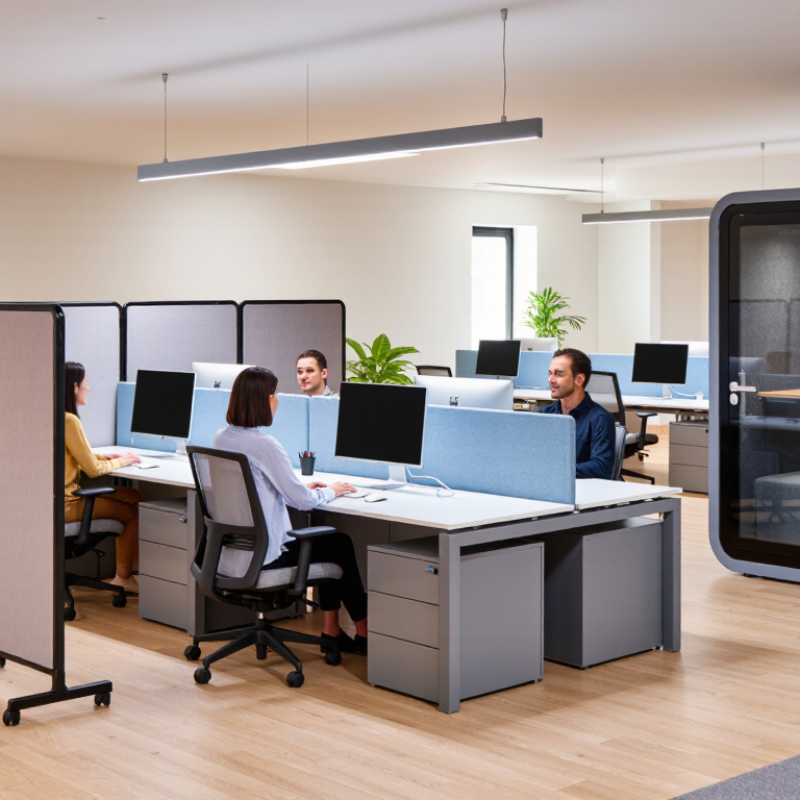
Personal-space products create a usable boundary without requiring a permanent room. Buyers can compare privacy screens, desk dividers, and enclosed work pods by asking what they need to block: sightlines, nearby conversation, or both. A frosted panel may hide a monitor from passing colleagues, but it will not soften much speech. Small details matter. Check panel height from a seated position and whether gaps remain at the sides.
Acoustic products should be judged by their construction and placement, not by claims of complete silence. Dense panels and absorptive surfaces can reduce echoes and make nearby speech less distracting. They rarely eliminate sound. A divider beside a hard wall may help less than one positioned between two workstations. If possible, try the product in a typical room; a quiet showroom can give a misleading impression.
Air quality deserves equal attention, especially in enclosed booths. Look for clear information about ventilation, filter type, replacement intervals, and operating noise. A booth can feel private yet become stuffy when airflow is weak. Ask how fresh air enters and whether the fan can run during calls. There is no perfect trade-off: stronger airflow may add noise, and compact filters need upkeep. I would not assume a built-in purifier replaces room ventilation. Check the specifications, then observe comfort during a longer work session.
What Are the Top Personal-Space Products for Buyers?
A feature map of personal-space products across visual privacy, acoustics, and air quality.
The chart shows whether each product type commonly addresses each need: 1 = typically designed to address it; 0 = not its primary function. These are feature categories, not measured performance ratings. Results vary by design, installation, and room conditions.
Use NIOSH’s 85 dBA 8-Hour Limit to Assess Noise-Control Products
Buyers comparing personal-space noise products should start with exposure, not a product label. NIOSH recommends limiting occupational noise to 85 dBA over an eight-hour workday. This is a recommended exposure limit, not a promise that any desk screen or quiet pod makes a space safe. Exposure also depends on time: under NIOSH’s 3 dB exchange rate, each 3 dB increase halves the recommended exposure duration.
Measure the actual work area during representative tasks. Use a properly calibrated sound level meter or noise dosimeter, with readings taken near the worker’s ear. A desk screen may soften nearby conversation, while an enclosed booth can block more sound if its door seals well. Small gaps matter. So do ventilation fans, hard floors, and voices entering from above a partition. Some products reduce echo but barely change the sound reaching a person. That distinction is easy to miss.
Compare readings before and after installation under similar conditions. Check the product’s test method, frequency data, dimensions, and ventilation details; a single reduction figure may not reflect your room. A panel is not a cure. If readings remain high, review equipment placement and work practices, and consult a qualified occupational safety professional. Personal hearing protection may also be appropriate, but it should not replace feasible noise controls. Measurements can be messy, and one quiet afternoon proves little.
Consider EPA’s Finding That Indoor Pollutants Are Often 2–5× Outdoor Levels
What Are the Top Personal Space Products for Buyers?
The U.S. Environmental Protection Agency’s The Inside Story: A Guide to Indoor Air Quality reports that concentrations of some indoor pollutants are often two to five times higher than outdoor levels. This is a caution, not a prediction for every room. A closed bedroom, cooking fumes, dust, and weak ventilation can all change exposure. Small details matter.
For a desk or sleeping area, consider a portable air cleaner with a HEPA filter and a clean-air delivery rate suited to the room. The EPA’s Guide to Air Cleaners in the Home explains that filtration can reduce airborne particles, but it does not remove every gas or pollutant. A basic indoor air monitor can help track particulate trends, though readings vary and cannot identify every contaminant. A display that looks reassuring may still miss something. Source control and fresh-air ventilation remain important.
Tips: Check the room-size rating before buying, and place the cleaner where air can move freely—not behind a curtain or beside a pile of laundry. The World Health Organization’s 2021 air-quality guidelines set PM2.5 reference levels of 5 µg/m³ annually and 15 µg/m³ over 24 hours; these are outdoor health guidelines, not indoor pass-or-fail limits. Use them as context, not a promise of safety.
Select Products by Fit, Accessibility, Safety, and Total Ownership Cost
What Are the Top Personal Space Products for Buyers?
Choosing a personal-space product starts with the room, not the catalogue. A desk screen may suit a compact office, while a freestanding divider can create a quieter corner without permanent changes. Measure the intended area, including door swings, chair movement, and walkways. Small details matter. Check whether the product blocks useful light or makes the space feel cramped. For enclosed pods, consider ventilation, lighting, and access to power before comparing finishes.
Tips: Measure twice, including the route from the delivery entrance. Check product weight, stability, edge finish, cleaning needs, and any stated safety documentation. If people using the space have different mobility needs, confirm that entrances and controls are reachable. A low price can be misleading.
Compare total ownership cost, not just the purchase price. Include delivery, assembly, installation, routine cleaning, replacement parts, and likely repairs. Ask how panels or fabric can be maintained, and whether components are replaceable. Acoustic claims should match the actual setting; a screen may reduce visual distraction without making a busy room quiet. A common oversight is choosing maximum privacy when shared light and easy conversation matter more. Revisit the choice after mapping how people will use the space each day.